
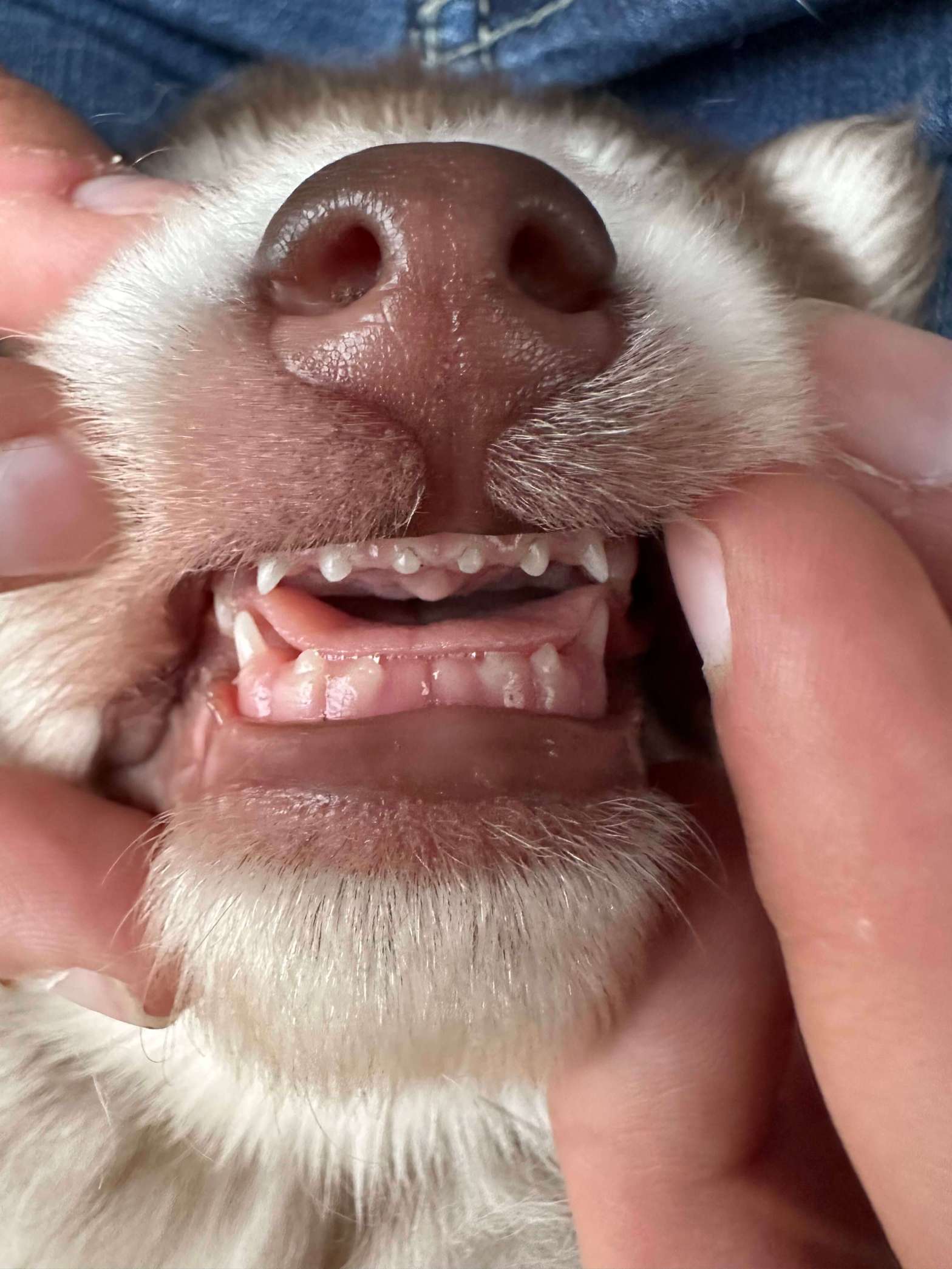
As our current litter of puppies turn 4 weeks old, most of their baby teeth, known as milk teeth, have erupted. They are far more energetic in their play and socialization, but equipped with their new teeth they are also entering into the puppy biting phase. This is a normal part of their development as they explore their environment and learn about the world around them. Check out the photos of our Current Litter.
Puppies, especially large breeds like Alaskan Malamutes, need to learn to control their strength early on. While this puppy biting is an important part of their development, it is also important to teach your puppies that biting others is not acceptable behavior.
While we start this training at Peak Northern kennels, this training will be an important part of their ongoing early training, after you bring your new puppy home. The puppy biting phase can continue for a number of months even after their baby teeth fall out, which normally occurs between 12-16 weeks of age. Here are a few important tips to help with this training:
- Redirect your puppies biting behaviors to appropriate chew toys. This will help them learn what is acceptable to bite or chew on.
- If they bite you aggressively during play let them know immediately that they hurt you, even if they didn’t. This can be done using yelping noises or cries of pain. Your puppy is part of your pack, loves you, and doesn’t want to hurt you, but they are still learning what is acceptable.
- Similar to the above, make a noise to distract them when they start biting then redirect them to perform non-biting behaviors such as sit, stay, come, etc. This will help them learn that biting is not an acceptable way to interact with people while also assisting with other aspects of their training.
- Use the silent treatment and ignore your pup for a time (NOTE: ensure the action has stopped first and don’t ignore them while they continue to act badly). If your dog does something inappropriate first correct them and then ignore them for a period of time to let them know that you are sad with them.
A combination of the above techniques will help as you progress through the puppy biting stage.
Remember that puppies are still learning and need guidance from their owners. With patience and consistency, you can help your puppies learn good behavior and grow into well-behaved adult dogs.
 Peak Northern Kennels